



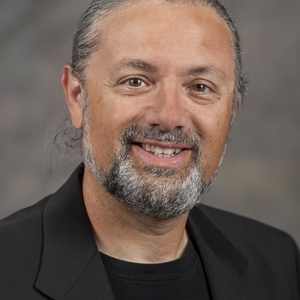

Craig Parks
I have two areas of research interest. I am primarily interested in the nature of cooperation within interdependent groups, especially groups faced with a social dilemma. In particular, I look at the role of individual differences in cooperation, and the impact of cognitive processes on cooperation. We have also begun to study how people react to group members who exhibit counternormative behavior within a social dilemma, specifically those who free ride, and those who have a high level of benevolence. The latter are people who do much to help the group and ask for little in return.
Surprisingly, we have found that benevolent people are not very popular in the long run. This seems to be because some people see benevolent individuals as an undesirable standard of comparison; some fear that the person will cause the group norm to shift from equitable behavior to benevolence; and a few see suspicious ulterior motives in benevolent behavior. We are currently trying to determine what individual and situational factors lead people to be more or less tolerant of benevolent individuals.
Jeff Joireman, Paul Van Lange and I have recently published a comprehensive model of the influences on cooperative choice in a social dilemma. We suggest that the model can be integrated with factors that produce hostility between groups to produce a complete picture of under what conditions a person will support a publicly beneficial good; when they will support its existence but not contribute toward it; and when they will actively work to suppress it.
I also study processes within decision-making groups. Here, I emphasize how the initial, pre-discussion distribution of individual preferences affects the ensuing process of reaching consensus. We have shown, for example, that group members who are initially unanimous as to what option should be adopted still feel the need to discuss the issue; it is unclear why. We are also looking into the the dynamics of small majorities, in particular whether their smallness undercuts the influential power usually ascribed to majorities.
Primary Interests:
- Aggression, Conflict, Peace
- Group Processes
- Intergroup Relations
- Interpersonal Processes
- Judgment and Decision Making
Note from the Network: The holder of this profile has certified having all necessary rights, licenses, and authorization to post the files listed below. Visitors are welcome to copy or use any files for noncommercial or journalistic purposes provided they credit the profile holder and cite this page as the source.
Image Gallery
Journal Articles:
- Balliet, D. P., Parks, C. D., & Joireman, J. (2009). Social value orientation, strong versus weak situations, and cooperation: A meta-analysis. Group Processes and Intergroup Relations, 12, 533-547.
- McPherson, S., & Parks, C. D. (2011). Intergroup and interindividual resource competition escalating into conflict: The elimination option. Group Dynamics, 15, 285-297.
- Parks, C. D., & Stone, A. B. (2010). The desire to expel unselfish members from the group. Journal of Personality and Social Psychology, 99, 303-310.
- Parks, C. D., Joireman, J., & Van Lange, P. A. M. (2013). Cooperation, trust, and antagonism: How publicly beneficial goods are promoted. Psychological Science in the Public Interest, 14, 119-165.
- Pula, K., McPherson, S., & Parks, C. D. (2012). Invariance of a two-factor model of social dominance orientation across gender. Personality and Individual Differences, 52, 385-389.
- Rumble, A. C., van Lange, P. A. M., & Parks, C. D. (2010). The benefits of empathy: When empathy may sustain cooperation in social dilemmas. European Journal of Social Psychology, 40, 856-866.
- Truelove, H. B., & Parks, C. D. (2012). Perceptions of behaviors that cause and mitigate global warming. Journal of Environmental Psychology, 32, 246-259.
- Van Lange, P. A. M., Joireman, J. A., Parks, C. D., & van Dijk, E. (2013). The psychology of social dilemmas: A review. Organizational Behavior and Human Decision Processes, 120, 126-141.
Other Publications:
- Parks, C. D. (2012). Personality influences on group processes: The past, present, and future. In M. Snyder & K. Deaux (Eds.), Handbook of social and personality psychology (pp. 517-544). New York: Oxford University Press.
Courses Taught:
- Correlation and Regression (Graduate)
- Group Dynamics (Graduate)
- Psychometrics (Graduate)
- Social Psychology (Undergraduate)
- Structural Equation Modeling (Graduate)
- Univariate and Multivariate ANOVA (Graduate)
Craig Parks
Department of Psychology
P.O. Box 644820
Washington State University
Pullman, Washington 99164
United States of America
- Work: (509) 335-8946
- Home: (509) 334-6457
- Fax: (509) 335-5043
